The Case for a Second Look
Why good neurotoxin treatment sometimes takes two weeks and another set of eyes. Dr. Adams on the two-week check, the difference between refinement and correction, and knowing when not to add more.
There is a particular temptation in aesthetics to believe the best treatment is the one that gets everything exactly right the first time. We disagree. Not because precision doesn't matter. Because it does. And sometimes precision requires patience. A face isn't a blueprint. It moves and compensates. One eyebrow may naturally sit higher than the other. One side of the forehead may be stronger. Certain muscles may work harder than others without you ever realizing it. Our skilled providers study all of that before treatment. However, there is still one thing that even the best assessment can't show and that is how your face will respond. That part takes time.
The two-week rule exists for a reason.
Neurotoxin doesn't finish its work before you leave the treatment chair. The effect develops gradually. You may notice changes within the first several days, but what you see on day three isn't necessarily what you'll see on day seven and neither may represent the result your provider wants to evaluate. An eyebrow that seems slightly uneven early on may settle beautifully. Movement that seems stronger on one side may continue to soften. A line that appears to be hanging on may simply need more time. Trying to perfect a result while it's still developing is a little like adjusting a painting before the paint has dried. Sometimes the smartest thing we can do is wait.
Then, we look again.
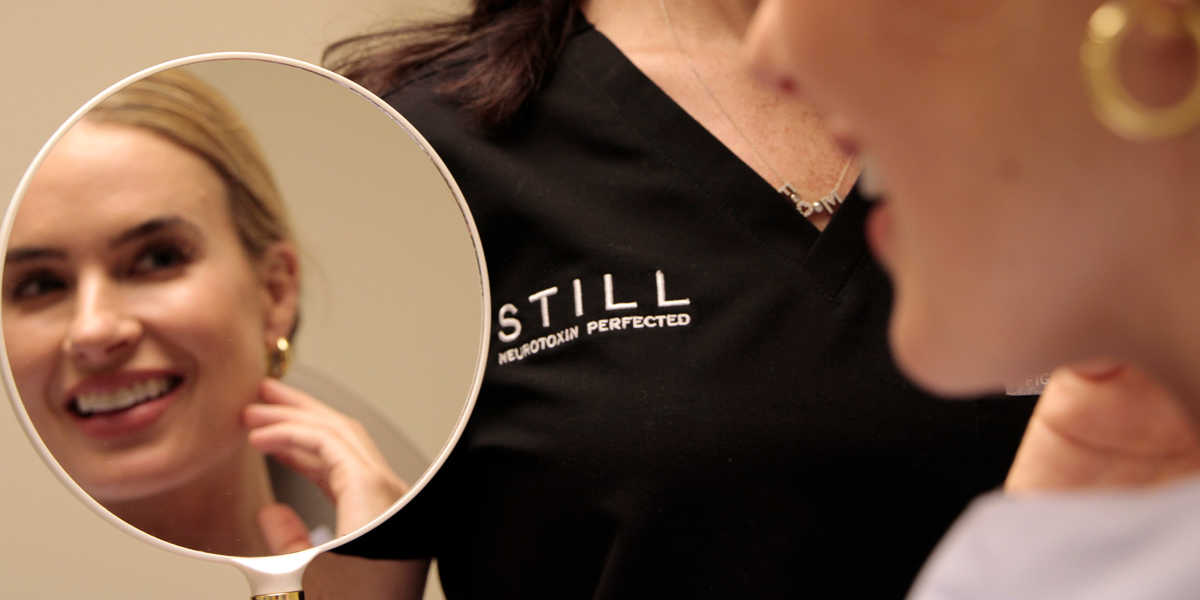
In approximately two weeks, the conversation changes and we are no longer just predicting how your muscles might respond. We can see how they did. We look at your face at rest and while it is moving. We watch where movement remains, how the two sides of the face are working together and whether the result matches what we intended when we made the original treatment plan. Sometimes a tiny adjustment could improve the balance. Sometimes a little movement is exactly what we wanted. And sometimes we look at everything and decide not to touch it.
More isn't the goal.
There is a strange assumption in aesthetics that if some is good, more must be better. Neurotoxin doesn't work that way. The goal isn't to eliminate the maximum amount of movement possible. It's to create the right amount of movement for that particular face and that particular treatment goal. When there's uncertainty about exactly how a muscle will respond, restraint matters. We can add a small amount of product after we've seen the response. We cannot immediately take it back out. Conservatism is more than an aesthetic preference, it's part of good judgment.
Refinement is not the same thing as correction.
This distinction gets lost. Coming back at two weeks for a small adjustment doesn't automatically mean the original treatment was wrong. It doesn't necessarily mean the product "didn't work." And it certainly doesn't mean the entire treatment needs to be repeated. Sometimes we're talking about an incredibly small amount of product placed in an incredibly specific location. Because sometimes the distance between good and exactly right is very small. We call that refinement.
The second look is part of the first treatment.
At STILL, we don't think the work ends when the needle leaves your skin. We want to know what happened afterward. Did the muscles respond the way we anticipated? Does your movement feel right? Does the result look balanced? Does it still look like you? If something needs a small adjustment once the treatment has fully developed, we can evaluate it and refine where appropriate. Not every face needs more. Knowing when not to add more is part of knowing what you're doing.
Precision has a pause button.
Neurotoxin sits at an interesting intersection. There is anatomy and pharmacology and muscle movement. And then there is proportion, expression, balance and judgment. The first appointment gives us an extraordinary amount of information. Two weeks gives us the answer.
Maybe we add a little or maybe we refine one small area or maybe we don't touch a thing. All three can be signs of a treatment done thoughtfully because the goal was never to use more. It was never to get everything "perfect" before you walked out the door. The goal was to know your face well enough to recognize when the work is finished.
Treat. Wait. Look again.
Then know when to stop.
STILL. Neurotoxin perfected.
Medically reviewed by Elizabeth Adams, MD. Last reviewed: September 2026.
Other recent
articles.

What Makes Botox Look Natural

The Needle & The Narrative — Issue 02: The Holiday Guide
Be STILL.
Be You.
Flat rate. Unlimited units. Consultation day of treatment. No waiting. Just done.
Join us in taking neurotoxins beyond the injection room